


Teacher Room Email Template (2)-02

Welcome to the Teachers Room!

Grab a coffee, pull up a chair. The Teachers Room is where educators come to breathe, think, and recharge — with practical tips, creative resources, and real inspiration for the work you do every day. We're just getting started, and we're so glad you found us.

Week 2: Daven for Her

As we continue the K’mayim Sefira Challenge, we return to a place that quietly shapes everything—our פנימיות. Week 2:Daven for Her   The Challenge Choose one student to focus on this week. Learn her full name, and say an extra tefilla or a perek of Tehillim for her each day. It can be just a small moment, but one filled with awareness and care.   This week’s challenge is to take a moment each day to daven for each of your K’mayim students. It can be a quiet perek of Tehillim, a mention in Shemoneh Esrei, or a simple bakasha from the heart. This is something to do consistently throughout the week—no matter how many times you teach. As you do this, keep in mind: A student may feel like a challenge, or even just “average” in the classroom—but she is someone’s whole world. A child deeply loved, with a neshama of real significance. Taking a moment to daven for her gently shifts the way we hold her, and that shift often carries into everything that follows.   Simple, quiet, and consistent—this is where deep connection begins.  Vaadim on K’mayim Special Mechanchim edition: Vaadim on K’mayim by R’ Meir Simcha

Read More »

Week 1: Belief Breeds Success

Welcome to the first week of the K’mayim Sefira Challenge. We begin not with action in the classroom, but with something more foundational: how we see our students on the inside. Week 1:Belief Breeds Success: The Subconscious Connection   The Challenge: Write a positive affirmation for each of your K’mayim students. Not a general compliment, but a statement of belief in her potential. “I believe that Hashem has granted this student infinite potential, and she has it in her to become…” For example: Though she seems so strong and opinionated, I can see the softness beneath the surface, and I know that one day she will find the right balance. or Beneath the gashmiyus that defines her surface, I believe that there is a neshama that is thirsty and ready to grow. The focus is not who she is today, but who she can become. As you do this, hold in mind: even when a student’s current challenges are visible, her strengths are there too—sometimes hidden, sometimes still unfolding. The way we see her can shape the way she begins to see herself. Take a few minutes for each student. Write your affirmations thoughtfully and personally. Let them stretch your

Read More »

The K’Mayim Challenge

The K’mayim Sefira Challenge is a 4-week journey designed for teachers across all grades. Each week, you’ll take on one focused, practical challenge—small, intentional shifts that reshape how you think about, relate to, and respond to your students. This is not about adding more to your workload. It’s about infusing what you’re already doing with deeper awareness and purpose. Are You Ready to Begin? Over the coming weeks, you’ll be guided step by step through this process. No complicated systems. Just internal work that leads to real results. Choose your students The Foundation What this looks like 1. Choose your Students Choose 2-4 students who you feel you did not connect with/get through to yet who will become YOUR Kmayim students, and watch the ripple effect take place.   Is it the quiet one who is never seen?  Do you really know her? Her likes, her challenges, her dreams she wishes will come true? Did you hear her voice yet?    Is it the student with the Personality Clash? She rubbed you the wrong way. Too outspoken. Too quick. She’s just all over the place!   Is it the student who is not in a good place b’ruchnius? Emotionally insecure.

Read More »

Like Water On Stone

https://tuteachercenter.org/wp-content/uploads/2026/04/Water-gif-2.mp4 [Drip – drip – drip – drip – drip]Drip [Shevy, please put that away.] Drip  [Shevy, how about we make a contest?] Drip [Shevy, let’s go for a walk in the yard.] Drip [Shevy, Chumash on your desk.] Drip [Shevy, that was an excellent question! Did everyone hear Shevy’s question?!] Drip [Shevy’s going to be our Bentching Monitor today.] Water  Soft, simple Constant, consistent Can bore a hole through impenetrable rock  It wasn’t the first drop that did it It wasn’t the sixteenth Or the six-hundredth – It was each of them It was all of them  It’s today’s gentle drop of effort And yesterday’s And tomorrow’s That are penetrating the impossible Moving mountains Breaking boulders Leaving the mark   of a teacher  who never says never.

Read More »

Last Weeks, Lasting Growth

She sits in the third row. She’s been there since September. She’s not disruptive. She hands in her work. When you call on her, she answers quietly and looks back down. Of course, you noticed her at the beginning of the year. You tried to draw her in—gave her a part in the play, offered a warm comment here, a small responsibility there. It didn’t seem to take. She smiled politely and retreated back into herself. And somewhere between November and February, without quite deciding to, you moved on. There were other students who simply demanded more. There was a curriculum to cover—Chumash, Megillah, then Haggadah. There was pressure to keep pace. “I tried,” you’ve told yourself. And it’s true. You did. The Alter of Slabodka once asked Rav Yisrael Salanter to define the mission of a mashgiach. The answer:להחיות לב נדכאים, להחיות רוח שפלים — to revive the hearts of the dejected; to revive the spirits of the humble. A vision of what one person, in the right moment, can do for another. There are two months left. Is there something you can do that could still make a difference in her life? Think about one student. You know

Read More »

Three Activities to Build a Positive Purim Atmosphere 

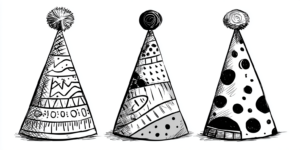
Have a great idea to share? The last day before Purim doesn’t have to dissolve into chaos. With a little planning, it can be both fun and meaningful for students.     The Clown Hat Reflection Each student decorates a paper clown hat — completely freestyle. When finished, the hats are displayed on the teacher’s desk. One by one, a student selects a hat (not her own) and describes both the design and the personality of the girl who created it. The only rule: every comment must be positive and anchored in the visible features of the hat. A symmetrical layout reflects careful thinking.Neat spacing signals organization.Vibrant colors suggest confidence.Detailed embellishments show depth and creativity. Materials Needed: White paper clown hats (one per student) Markers, Colored pencils, crayons, scissors, tape, glue, stapler Optional: glitter glue, stickers, patterned paper scraps List of attributes for students to work with     The Costume Hat Circle For this activity, each girl brings a costume hat from home and places it in a box. Students sit in a circle with the box in the center. One at a time, a student draws a hat and “assigns” it to someone in the class — explaining

Read More »

7 Tips for Teaching Pesach

https://tuteachercenter.org/wp-content/uploads/2026/02/Pesach%20Tips%20Presentation.mp4 7 veteran teachers share their top tips for teaching Pesach MORAH BUSEL7th Grade, Bais Yaakov D’Rav MeirPrepare thoughtfully. Know the purpose of each mitzvah and each paragraph of the Haggadah, and internalize its flow so your teaching is clear, deep, and intentional. MORAH ZIEMBA6th Grade, Bais Yaakov 18th AveMaintain clear focus:The objective is to illuminate the pshat of the Haggadah while conveying enduring messages of emunah. MORAH WEISSMANDL7th Grade, Bais Yaakov D’Rav MeirCultivate a calm, structured classroom environment that enables students to absorb the emunah. MORAH KNOBEL7th Grade, Torah Academy for GirlsDivrei Torah should reinforce the hashkafic themes of Pesach to maximize time and impact.Brief daily quizzes—including a question on a Dvar Torah— strengthen accountability. MORAH GANZWEIG7th Grade, Bais Yaakov Boro ParkIncorporate color-coding into the pesukim of “Arami Oved Avi.”The visual cues serve as familiar anchors, equipping students to follow the storyline at the Seder. MRS. SARA CHAYA FARBSTEINTU Educational ConsultantGather information about each student’s minhagim to bolster pride in her family’s mesorah.Allocate time to teach about the rest of Pesach, not just the Seder. MORAH STEFANSKY6th Grade, YDEEstablish a system of accountability that fosters student ownership of their Haggadah. MORAH DECKELBAUMCurriculum Coordinator, Bais Tova• Create your own lessons

Read More »

Behind the Desk to Director’s Chair

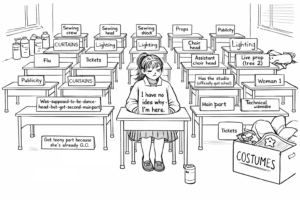
The elementary school teacher’s guide to putting on a class performance Siddur play, Chumash play, Purim play, Tehillim play, Birchas Yaakov performance, Rosh Chodesh assembly, seventh-and-eighth grade performance… Most elementary school teachers have one of the above written into their contracts. Opinions and feelings, when we took a poll, were mixed. Excellent advice was a’plenty. Read, enjoy and get equipped!   The Upsides Nechama is a sixth grade teacher who’s been running her annual class play for many years. She sees firsthand the positive outcomes of the efforts she invests to make a beautiful performance where every student can truly shine. “A lot of girls really have hidden talents. Giving a girl the responsibility to take charge can show you a side of her you never knew existed. Pushing a shy student to take a role you know she is really capable of can open her up, turning her into her true self and boosting her social standing.” For the students, it’s a change of pace that adds color to an otherwise predictable year, and for many, it’s what they will most remember. “A play is not a waste of time. They might learn more from play than from class.

Read More »

Chazak, Chazak, V’Nischazek!

A Siyum Summary The standard celebration for completing a perek or significant amount of learning is the ubiquitous siyum. Aside from serving as a major incentive for students to keep on learning with vigor, the siyum makes an important statement to our talmidos: Every part of Torah is precious, valuable, and immeasurably special – and your hard work to gain knowledge and understand is a simcha to be celebrated.  If planning a siyum  for your class is still a challenge, you’re not alone. Class dynamics, time, school policies and a host  of other factors can make it a daunting task. Read on for valuable pointers from teachers who have their siyum systems down to a science.   The White Shirt  What’s a siyum without a white shirt? It’s important to keep track of the date – if Rosh Chodesh is the same week, it can be challenging for mothers laundry-wise.    The Program “I find it challenging to come up with new ideas for siyum activities – as the years go on, everything becomes so common and passe.” Shana shares.  Rivky explains that she began taking the initiative to move beyond the standard “game–dance–skit–banner” format. While the girls may not

Read More »

The Power of PTA

Parent-teacher conferences can feel intense. It’s a long evening, squeezed into an already packed week, and it sometimes comes with anxiety on both sides of the desk. But when approached thoughtfully, PTA can become one of the most uplifting, relationship-building parts of the school year—for you and for parents. Here are some practical, real-world insights designed to guide teachers—new and experienced alike—toward meaningful, productive conferences. Want to hear more? These tips come  come from Torah Umesorah’s The Power of PTA—a rich, practical session packed with guidance, insight, and live role play. Click to watch.     Why PTA Still Matters In many schools, teachers are already in consistent contact with parents. You make your welcome calls before the year begins, send notes home, reach out when needed. So why gather everyone on one night? Why the babysitters, parking, schedules, and stress? Because face-to-face connection builds something no email or phone call can. Parents know their child at home; teachers know their child in the classroom. Those two versions can be surprisingly different. PTA creates space to exchange perspectives, align expectations, and understand the whole child more clearly. Most teachers walk away from the evening feeling uplifted and appreciated, reminded of the strong

Read More »

Report Card Comments

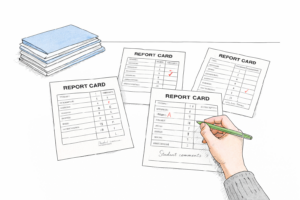
Report card comments serve a vital purpose in a student’s educational journey. These comments offer insights into a student’s strengths and overall character.  It’s important to be careful and thoughtful when writing report card comments. Positive language can encourage and inspire, while negative comments can stifle a student’s enthusiasm. By weighing every word carefully, educators can provide constructive feedback that nurtures growth and resilience, fostering an environment where students feel valued for their qualities and contributions to the class, beyond academic achievement. Some principals feel that report cards should only reflect positive aspects of the student. “We can share constructive criticism separately, either verbally or through written memos, allowing the comment section to focus solely on positive feedback,” says one veteran Bais Yaakov principal. “Along with academic performance, most schools include a section to rate character, effort, and conduct, providing students with clear feedback on areas that need improvement.“ Don’t hesitate to ask for guidance from your superiors when writing comments for your students. Speak with your principal to clarify your school’s expectations.  Keep in mind that report cards are a permanent part of a student’s record. The words we choose can significantly impact a student’s appearance in the eyes

Read More »

Teaching Yom Kippur in Two Days

Engaging lessons that fit tight schedules As Yom Kippur draws near, Limudei Kodesh teachers are presented with an opportunity to dive deep into the meaning and minhagim of this important day— all in just a few teaching days!  That’s why we’ve collected interactive teaching ideas that will not only engage your students but also help them absorb a lot of information in a short amount of time.  Fast Facts Start with a mini challenge! Hand your students a list of statements about the new topic and let them decide if each one is true or false—or if they agree or disagree. It’s a fun way to get brains buzzing and conversations started, plus it gives you a sneak peek at what they already know (or think they know!). Example: True or False? We fast on Yom Kippur to commemorate the shattering of the luchos. We hear 100 shofar blasts on Yom Kippur. When Yom Kippur falls out on Shabbos, we don’t fast.  Four Corners Pose a question with four possible viewpoints and let students physically “take a stand” by moving to the corner that matches their opinion. They then get to explain why they chose it, sparking conversation and giving

Read More »

Making Connections

Starting the year with a positive connection can pave the way for successful communication throughout the school year. This isn’t just a formality; it’s an opportunity to lay a solid foundation between you, the teacher, and the parents of your students.

Read More »

Grading Shortcut

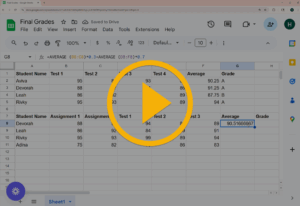
https://tuteachercenter.org/wp-content/uploads/2025/06/Excel-grading.mp4 Spreadsheets make calculating students’ grades quick and easy. They’re efficient and can be easily updated if anything changes, saving you from redoing all the math. Plus, they help keep everything organized and accurate, reducing mistakes. With a digital backup, your data is safe and easy to share with the school office, making it simple to include grades on report cards. Overall, spreadsheets make grading a breeze! If you’ve never done this before, here’s a step-by-step guide to creating your custom grading spreadsheet. 1. Set Up the Spreadsheet Header Open Excel and in Row 1, create the following headers: A1: Student Name B1: Test 1 C1: Test 2 D1: Test 3 E1: Test 4 F1: Final Score G1: Grade You can adjust the number of assignments/tests to suit your needs. 2. Enter Students’ Scores In rows 2 and onward, enter data for each student. Example: A2: Aviva B2: 85 C2: 90 D2: 88 E2: 92 Do this for each student in rows below. Formulas to Enter Average Score (In cell F2)  =AVERAGE(B2:E2) Copy this formula down column F for all students. Letter Grade (in cell G2) =IF(F2>=90,”A”,IF(F2>=80,”B”,IF(F2>=70,”C”,IF(F2>=60,”D”,”F”)))) Copy this down column G for all students.   TIP: to quickly copy

Read More »

Marking Simplified

There’s nothing more exhilarating than a pile of marked papers. And there’s nothing more overwhelming than a pile of unmarked test papers. Testing and accurate marking are necessary to hold students accountable and give them the feedback they crave. Here are some tips to lighten your marking load and help you finish the school year paperwork-free!   In General: Plan Ahead When creating your test, set up the questions to make the marking move quicker. Use more short-answer or multiple-choice questions. (Click HERE for more tips on creating tests.) Small increments Tackle five to ten tests at a time. Section by section Create a sample answer sheet and cut out the answers to each section. Put the answer key near the students’ answers to rely less on your memory. Magic Marker Hire an assistant or a colleague to help with grading.   For Essays and Long Answers: Use symbols or colors to provide quick feedback instead of writing lengthy comments. Criteria for Success: By clarifying expectations in advance, you can reduce the time you spend deliberating over grades, and students will be less likely to dispute their grades. For Rating Sheets Use Excel or Google Spreadsheets to calculate averages. (Click

Read More »

Last Day Lessons

“Last day’s lesson? Sore topic!” says a fourth-grade teacher. “I can never predict how long the end-of-year assembly will last, so every year I end up either over-planning or under-planning the closure activity!” Navigating the school year’s close can be quite challenging for educators. With various school-wide assemblies and the need to wrap up the curriculum, finding the balance of a quick-but-impactful activity can be tough. However, incorporating one of the following interactive activities can transform the last days of school into a valuable opportunity to celebrate student achievements, share cherished memories, and strengthen the sense of community among classmates. These activities can be adapted to fit a time frame of 15 to 45 minutes, allowing teachers to maintain flexibility as needed. Craft On the last day of school, a third-grade teacher we asked said she wraps up the scrapbook page for the final bracha of Shemone Esrei. “Crafts are a joyful way to conclude the year, allowing students to take pride in their accomplishments,” she shares. Compliment Cards This is a creative twist on the traditional autograph page! Use this template to let students share compliments with their classmates. Customize the document to create an individual sheet for each

Read More »

Preparing an Effective Final Exam

Creating Questions Create an outline of the material taught Mark “must know” vs. “nice to know” information. When creating questions, prioritize questions on “must know” content  Be cognizant of students’ skills and age level when choosing types of questions Think ahead towards marking: True/false, multiple choice, matching = quick scoring. Open-ended questions = more time-consuming.   Fine-Tuning Take the exam yourself; time it to gauge difficulty. Have someone else take the exam for perspective. This will help you be aware of potential issues students may face. Write clear instructions for each test section. Include a warm note or poem in the cover letter for the final to reduce stress.   Preparing Your Students Distribute copies of your outline to students. This provides them with a framework for studying and helps them realize that the content is not infinite.  Teach effective study strategies. (You can refer to this article for ideas on how to prepare students for the testing season.)

Read More »

Studying Tips for HS Students

Over the years, I’ve observed that many students struggle with navigating complex subject matter and managing their time effectively, while juggling a budding teen’s social life. Many may not have fully developed studying skills yet, so it’s crucial that we teach them effective methods.  To help them, I compiled a list of practical tips that I share every year during one of our last lessons.   By equipping students with essential skills, we can help them succeed academically while also fostering healthy relationships. I want to share these insights so you can pass them on to your students.   Tips for Students Choose a study environment that enhances your focus. Consider kicking off your studying at home and joining a group of friends later. Ensure you have everything you need in place before you start. This includes books, seforim, notes, school supplies, and refreshments. Familiarize yourself with the possuk. Read the words in Lashon Hakodesh and translate the pshat before consulting your notes or meforshim. Read aloud, even when you’re alone, because it improves retention. This is especially helpful with pesukim that you’ll need to recognize on the test. Plan ahead to avoid cramming by studying 2-3 days in advance

Read More »

Micro-Moments

A classroom is a busy place. Homework sheets, contests, tests, recess time, projects…the action is nonstop. In this thriving hive of activity, how can we find the time to build real, lasting relationships with our students? To encourage our students to foster relationships with each other? To connect with them on their level? Introducing Micro Moments! A curated collection of suggestions, ideas, activities, and projects that can fit into your classroom, in those small pockets of time that open up throughout the year. Designed to utilize each available moment as a connection building opportunity, these Micro Moments cards are easy, fun, and can be adapted to your classroom style and grade level.Two extra minutes at the end of class? Day after midwinter vacation? School assembly finished early?Pull out a card and turn those micro-moments into macro-opportunities!   Here are a few to get you hooked, or buy the full collection! For the first day back after Pesach vacation: STICKER DESIGN Using round or rectangular blank labels, students design ‘bumper stickers’ or ‘doctor stickers’ that depict a scene from their vacaction/Yom Tov break. All stickers are then stuck onto a large oaktag/poster board for the students to view and discuss during

Read More »

Channeling Spring Fever with Group Projects

Group projects are a great way to bring energy to your classroom! The combination of autonomy, creativity, and competition inspires healthy productivity.Criteria for Success are crucial when introducing the project. List the requirements with a clear and authoritative header, such as, “Your Project Must Include.” When outlining your project criteria, ensure it includes a list of nouns rather than verbs. Supply oak tags and markers to inspire artistic students and allow them to express their creativity. Criteria for success are clear, specific standards used to evaluate whether a school project achieves its intended objectives. They guide students and teachers in assessing the project’s quality, effectiveness,and completeness.     Sample Group Project: Yom Tov YOUR GROUP’S SUBMISSION MUST INCLUDE:       Sample Group Project: Chumash/Navi YOUR GROUP’S SUBMISSION MUST INCLUDE: Download Sample Projects  

Read More »

Sefira in the General Studies Classroom

A High School classroom is an excellent space for growth-oriented discussion, even during secular studies. Bashy, a teacher of ninth-grade English Language Arts, uses literary pieces on self-growth topics during Sefira.  She sometimes brings in children’s books, too. The students love the lighter atmosphere that picture books bring. The lesson is structured just like all other Literature classes, and the theme, rhyme structure, imagery, etc. spark quality literary discussion.  She has some favorites that she shared with us: Click to download Oak and the Rose by Shel Silverstein Zebra Question by Shel Silverstein The Journey of Success by Nancy Hammel Download Articles     Books that can be purchased at national bookstores   The Sneetches by Dr. Seuss A typical Dr. Seuss-style book about a community of Sneetches who are divided into two groups: those with stars on their bellies and those without. Through the storyline, the Sneetches realize that their external differences do not define their worth, leading to a conclusion about equality and friendship. Brings home the meaninglessness of peer pressure and how people tend to perpetuate such an environment. Amazon Link     One by Karthyn Otoshi A book about a group of colored circles who stand

Read More »

Too Much to Cover or Nothing to Teach?

The end-of-year curriculum crunch It’s usually not more than eight weeks – ten, tops.  For some, it feels more like five months. For others, three days.  Approach any teacher during those air-conditioner-blasting, summer-fever-burning school days and tell her you need her class for an hour. She’ll either bless you or plead the verge of tears, promising you anything at all, if you just let her continue teaching for that precious hour.  What’s your core challenge in those last weeks of school – too much to cover or nothing to teach?  It’s all dependent on an endless list of factors, such as grade level, subject, class temperament or learning style, teacher personality, the interplay between Hebrew and secular calendar, and testing schedules. Throw in a few unforeseen circumstances, performances, trips, state tests, reviews, finals, memory-making, etc.,  and the short few weeks are shortened by another one or two weeks, at least.  A select (and much-envied!) few seem to have it down to a science, breezing right through May and June while others rush to cram it all in.  No matter your style – we get you – and we’ve got you covered.  Which one are you?  So little time and still

Read More »

Week 2: Daven for Her

As we continue the K’mayim Sefira Challenge, we return to a place that quietly shapes everything—our פנימיות. Week 2:Daven for Her   The Challenge Choose one student to focus on this week. Learn her full name, and say an extra tefilla or a perek of Tehillim for her each day. It can be just a small moment, but one filled with awareness and care.   This week’s challenge is to take a moment each day to daven for each of your K’mayim students. It can be a quiet perek of Tehillim, a mention in Shemoneh Esrei, or a simple bakasha from the heart. This is something to do consistently throughout the week—no matter how many times you teach. As you do this, keep in mind: A student may feel like a challenge, or even just “average” in the classroom—but she is someone’s whole world. A child deeply loved, with a neshama of real significance. Taking a moment to daven for her gently shifts the way we hold her, and that shift often carries into everything that follows.   Simple, quiet, and consistent—this is where deep connection begins.  Vaadim on K’mayim Special Mechanchim edition: Vaadim on K’mayim by R’ Meir Simcha

Read More »

Week 1: Belief Breeds Success

Welcome to the first week of the K’mayim Sefira Challenge. We begin not with action in the classroom, but with something more foundational: how we see our students on the inside. Week 1:Belief Breeds Success: The Subconscious Connection   The Challenge: Write a positive affirmation for each of your K’mayim students. Not a general compliment, but a statement of belief in her potential. “I believe that Hashem has granted this student infinite potential, and she has it in her to become…” For example: Though she seems so strong and opinionated, I can see the softness beneath the surface, and I know that one day she will find the right balance. or Beneath the gashmiyus that defines her surface, I believe that there is a neshama that is thirsty and ready to grow. The focus is not who she is today, but who she can become. As you do this, hold in mind: even when a student’s current challenges are visible, her strengths are there too—sometimes hidden, sometimes still unfolding. The way we see her can shape the way she begins to see herself. Take a few minutes for each student. Write your affirmations thoughtfully and personally. Let them stretch your

Read More »

The K’Mayim Challenge

The K’mayim Sefira Challenge is a 4-week journey designed for teachers across all grades. Each week, you’ll take on one focused, practical challenge—small, intentional shifts that reshape how you think about, relate to, and respond to your students. This is not about adding more to your workload. It’s about infusing what you’re already doing with deeper awareness and purpose. Are You Ready to Begin? Over the coming weeks, you’ll be guided step by step through this process. No complicated systems. Just internal work that leads to real results. Choose your students The Foundation What this looks like 1. Choose your Students Choose 2-4 students who you feel you did not connect with/get through to yet who will become YOUR Kmayim students, and watch the ripple effect take place.   Is it the quiet one who is never seen?  Do you really know her? Her likes, her challenges, her dreams she wishes will come true? Did you hear her voice yet?    Is it the student with the Personality Clash? She rubbed you the wrong way. Too outspoken. Too quick. She’s just all over the place!   Is it the student who is not in a good place b’ruchnius? Emotionally insecure.

Read More »

Like Water On Stone

https://tuteachercenter.org/wp-content/uploads/2026/04/Water-gif-2.mp4 [Drip – drip – drip – drip – drip]Drip [Shevy, please put that away.] Drip  [Shevy, how about we make a contest?] Drip [Shevy, let’s go for a walk in the yard.] Drip [Shevy, Chumash on your desk.] Drip [Shevy, that was an excellent question! Did everyone hear Shevy’s question?!] Drip [Shevy’s going to be our Bentching Monitor today.] Water  Soft, simple Constant, consistent Can bore a hole through impenetrable rock  It wasn’t the first drop that did it It wasn’t the sixteenth Or the six-hundredth – It was each of them It was all of them  It’s today’s gentle drop of effort And yesterday’s And tomorrow’s That are penetrating the impossible Moving mountains Breaking boulders Leaving the mark   of a teacher  who never says never.

Read More »

Last Weeks, Lasting Growth

She sits in the third row. She’s been there since September. She’s not disruptive. She hands in her work. When you call on her, she answers quietly and looks back down. Of course, you noticed her at the beginning of the year. You tried to draw her in—gave her a part in the play, offered a warm comment here, a small responsibility there. It didn’t seem to take. She smiled politely and retreated back into herself. And somewhere between November and February, without quite deciding to, you moved on. There were other students who simply demanded more. There was a curriculum to cover—Chumash, Megillah, then Haggadah. There was pressure to keep pace. “I tried,” you’ve told yourself. And it’s true. You did. The Alter of Slabodka once asked Rav Yisrael Salanter to define the mission of a mashgiach. The answer:להחיות לב נדכאים, להחיות רוח שפלים — to revive the hearts of the dejected; to revive the spirits of the humble. A vision of what one person, in the right moment, can do for another. There are two months left. Is there something you can do that could still make a difference in her life? Think about one student. You know

Read More »

No Work and All Play…?

Kvetches, thoughts and tips on teaching through play season by teachers like you.   Join ‘em The majority of teachers shared roughly the same game plan: Don’t fight them – show genuine interest and share in their excitement. Hindy acknowledges that teaching during production season is definitely compromised teaching. “It’s not just the missed class time – it’s a serious lack of focus.” Still, she believes that these few weeks mean the world to so many students and create their fondest high school memories. “Make peace with the reality of play season and lean into it,” she advises.  Liba says that when she gives her students time to talk about the play, they feel like she’s “in on it”. She finds that the more she connects with their performance, the better they snap back into real learning in her class post-play season. Of course, she tries to attend either the dress rehearsal or the play. “I find that I gain more than I lose when I show interest and devote time to their play, when I don’t make them feel that their year’s highlight is a nuisance to me.”   Set (very) Realistic Goals Shifra, a veteran mechaneches who just

Read More »

The Power of PTA

Parent-teacher conferences can feel intense. It’s a long evening, squeezed into an already packed week, and it sometimes comes with anxiety on both sides of the desk. But when approached thoughtfully, PTA can become one of the most uplifting, relationship-building parts of the school year—for you and for parents. Here are some practical, real-world insights designed to guide teachers—new and experienced alike—toward meaningful, productive conferences. Want to hear more? These tips come  come from Torah Umesorah’s The Power of PTA—a rich, practical session packed with guidance, insight, and live role play. Click to watch.     Why PTA Still Matters In many schools, teachers are already in consistent contact with parents. You make your welcome calls before the year begins, send notes home, reach out when needed. So why gather everyone on one night? Why the babysitters, parking, schedules, and stress? Because face-to-face connection builds something no email or phone call can. Parents know their child at home; teachers know their child in the classroom. Those two versions can be surprisingly different. PTA creates space to exchange perspectives, align expectations, and understand the whole child more clearly. Most teachers walk away from the evening feeling uplifted and appreciated, reminded of the strong

Read More »

Grading Shortcut

https://tuteachercenter.org/wp-content/uploads/2025/06/Excel-grading.mp4 Spreadsheets make calculating students’ grades quick and easy. They’re efficient and can be easily updated if anything changes, saving you from redoing all the math. Plus, they help keep everything organized and accurate, reducing mistakes. With a digital backup, your data is safe and easy to share with the school office, making it simple to include grades on report cards. Overall, spreadsheets make grading a breeze! If you’ve never done this before, here’s a step-by-step guide to creating your custom grading spreadsheet. 1. Set Up the Spreadsheet Header Open Excel and in Row 1, create the following headers: A1: Student Name B1: Test 1 C1: Test 2 D1: Test 3 E1: Test 4 F1: Final Score G1: Grade You can adjust the number of assignments/tests to suit your needs. 2. Enter Students’ Scores In rows 2 and onward, enter data for each student. Example: A2: Aviva B2: 85 C2: 90 D2: 88 E2: 92 Do this for each student in rows below. Formulas to Enter Average Score (In cell F2)  =AVERAGE(B2:E2) Copy this formula down column F for all students. Letter Grade (in cell G2) =IF(F2>=90,”A”,IF(F2>=80,”B”,IF(F2>=70,”C”,IF(F2>=60,”D”,”F”)))) Copy this down column G for all students.   TIP: to quickly copy

Read More »

Marking Simplified

There’s nothing more exhilarating than a pile of marked papers. And there’s nothing more overwhelming than a pile of unmarked test papers. Testing and accurate marking are necessary to hold students accountable and give them the feedback they crave. Here are some tips to lighten your marking load and help you finish the school year paperwork-free!   In General: Plan Ahead When creating your test, set up the questions to make the marking move quicker. Use more short-answer or multiple-choice questions. (Click HERE for more tips on creating tests.) Small increments Tackle five to ten tests at a time. Section by section Create a sample answer sheet and cut out the answers to each section. Put the answer key near the students’ answers to rely less on your memory. Magic Marker Hire an assistant or a colleague to help with grading.   For Essays and Long Answers: Use symbols or colors to provide quick feedback instead of writing lengthy comments. Criteria for Success: By clarifying expectations in advance, you can reduce the time you spend deliberating over grades, and students will be less likely to dispute their grades. For Rating Sheets Use Excel or Google Spreadsheets to calculate averages. (Click

Read More »

Preparing an Effective Final Exam

Creating Questions Create an outline of the material taught Mark “must know” vs. “nice to know” information. When creating questions, prioritize questions on “must know” content  Be cognizant of students’ skills and age level when choosing types of questions Think ahead towards marking: True/false, multiple choice, matching = quick scoring. Open-ended questions = more time-consuming.   Fine-Tuning Take the exam yourself; time it to gauge difficulty. Have someone else take the exam for perspective. This will help you be aware of potential issues students may face. Write clear instructions for each test section. Include a warm note or poem in the cover letter for the final to reduce stress.   Preparing Your Students Distribute copies of your outline to students. This provides them with a framework for studying and helps them realize that the content is not infinite.  Teach effective study strategies. (You can refer to this article for ideas on how to prepare students for the testing season.)

Read More »

Studying Tips for HS Students

Over the years, I’ve observed that many students struggle with navigating complex subject matter and managing their time effectively, while juggling a budding teen’s social life. Many may not have fully developed studying skills yet, so it’s crucial that we teach them effective methods.  To help them, I compiled a list of practical tips that I share every year during one of our last lessons.   By equipping students with essential skills, we can help them succeed academically while also fostering healthy relationships. I want to share these insights so you can pass them on to your students.   Tips for Students Choose a study environment that enhances your focus. Consider kicking off your studying at home and joining a group of friends later. Ensure you have everything you need in place before you start. This includes books, seforim, notes, school supplies, and refreshments. Familiarize yourself with the possuk. Read the words in Lashon Hakodesh and translate the pshat before consulting your notes or meforshim. Read aloud, even when you’re alone, because it improves retention. This is especially helpful with pesukim that you’ll need to recognize on the test. Plan ahead to avoid cramming by studying 2-3 days in advance

Read More »

Graduations

End-of-year celebrations in early childhood should feel joyful, simple, and meaningful—for both children and teachers. You don’t need anything overproduced to make it memorable; it’s the milestone itself that makes it special. Here are some ideas that strike that balance: “Little Steps, Big Growth” Ceremony Keep it short and sweet.Each child walks across a small “stage,” and you share one personal sentence about them—a strength, a moment of growth, or something that makes them unique. They receive a certificate, and a soft background song can add a special touch.   Themed Performance (Short + Sweet) Choose 2–3 songs with simple motions. Themes that work well: Keep it under 10 minutes—parents appreciate it, and children stay engaged.   Individual “Spotlight Moments” Instead of a full performance, give each child a moment to shine.Call them up and say something like:“This is ___, he loves building and is always ready to help his friends.”Each child can share something small—a favorite song line, a skill, or even just a wave to the audience 😊   Memory Walk / Classroom Museum Turn your classroom into a “year in review.”  Display: Parents walk through while their children “guide” them, sharing their experiences.   Live Art or

Read More »

Repeating A Grade

Is Repeating a Grade the Right Choice?  A Thoughtful Look for Early Childhood Educators   By Mrs Becky Udman Early Childhood Consultant, Torah Umesorah   It’s one of the hardest questions we face as early childhood educators:Is this child ready to move on—or would they truly benefit from another year? Grade retention is never a simple decision. It’s layered with emotion, pressure, and a deep desire to do what’s best for the child sitting right in front of us. And in early childhood, where development can vary so widely, the answer is rarely black and white.   When an Extra Year Might Make Sense When a child “sticks” out amongst his peers in more then one area of development we want to consider what Dr Ross Green, a renowned clinical psychologist and author,  teaches, “Children are not lacking the will, they are lacking the skill.” When teaching young children our main goal is to instill a love for learning and a love for Torah. If a child is often frustrated and constantly being redirected and corrected there is potential to Chas VShalom create a negative association with learning and Torah. Although most children develop at a typical pace, some children

Read More »

Join the Movement

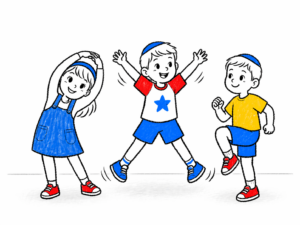
Movement Builds Minds:  3 Ways to incorporate more kinesthetics in your learning   Have you ever noticed how children remember songs with motions better than spoken directions alone? That’s because movement anchors learning. When children act out information, march while counting, or form letters with their bodies, they strengthen learning in several ways at once. They create multiple memory pathways — visual, auditory, and kinesthetic. The more pathways involved, the stronger the retention. The best part? You don’t need special equipment or extra time. Movement can easily become part of your everyday classroom routine.   1. Add motions to songs and stories Whether students are singing along or just listening, involve them by adding motions for them to mimic. When reading a story, invite children to copy your movements, use hand motions for key words, or act out parts of a story as you read.   2. Use cross-body warm-ups before or during circle time Short movement breaks help young children get their bodies ready to learn. One of the most powerful forms of movement for brain development is bilateral coordination — the ability to use both sides of the body together in a controlled and organized way. Examples include:

Read More »

From Restless to Ready

3 practical ways to navigate spring fever As the weather warms and the days grow longer, something shifts in the classroom. Children become more energetic, more jumpy, and sometimes… a little less focused. Sound familiar? That’s spring fever—and while it can feel challenging, it’s also an opportunity. With the right approach, you can channel that energy into joyful, meaningful learning experiences.   Embrace the Energy—Don’t Fight It Let them move more – on purpose. Spring energy isn’t the enemy—it just needs direction. Build in frequent, intentional movement like music-and-motion, obstacle courses, scavenger hunts, or quick “brain breaks” to help children release energy and refocus. Even something as simple as “stand up, reach to the sky, sit back down” can help reset the group.   Take Learning Beyond the Classroom Walls (when possible 🙂 Use the excitement of the season to your advantage by moving parts of your day outside. Nature walks, outdoor centers, or even circle time in fresh air! The change of setting often helps children focus better, and the novelty makes learning feel exciting and new.   Maintain Structure with Flexible Routines Children need predictability, even when their energy spikes. Keep your core routine consistent, but add small

Read More »

Like Water On Stone

https://tuteachercenter.org/wp-content/uploads/2026/04/Water-gif-2.mp4 [Drip – drip – drip – drip – drip]Drip [Shevy, please put that away.] Drip  [Shevy, how about we make a contest?] Drip [Shevy, let’s go for a walk in the yard.] Drip [Shevy, Chumash on your desk.] Drip [Shevy, that was an excellent question! Did everyone hear Shevy’s question?!] Drip [Shevy’s going to be our Bentching Monitor today.] Water  Soft, simple Constant, consistent Can bore a hole through impenetrable rock  It wasn’t the first drop that did it It wasn’t the sixteenth Or the six-hundredth – It was each of them It was all of them  It’s today’s gentle drop of effort And yesterday’s And tomorrow’s That are penetrating the impossible Moving mountains Breaking boulders Leaving the mark   of a teacher  who never says never.

Read More »

Skill Building Through the Haggadah

Creating a Haggadah is a meaningful and memorable part of Early Childhood preparation for Pesach. When approached creatively, it becomes more than a project—it blends skill-building, artistic expression, and hands-on learning, helping children connect deeply to the story of Pesach. Cognitive development: how children think, explore, remember, and understand is one area of child development. The growth is rapid in the early childhood years, especially in language, memory, problem-solving, and imagination. Cognitive development in early childhood is nurtured through: Conversation Play Exploration Reflection Intentional questioning Watch this class for more about cognitive development  Practical Ideas:   Language   The Seder is full of “why” moments—why do we dip twice, why do we recline, why do we eat matzah? Ask children to think about these questions, make predictions, or suggest explanations, which encourages logical reasoning and critical thinking. You can turn these questions into interactive games, such as sorting “cause and effect” cards. The Haggadah introduces rich vocabulary—from Hebrew terms like the Simanei HaSeder to descriptive language about the Makkos. Don’t substitute these words with simpler, more familiar ones; use the opportunity to enrich students’ vocabulary.   Sequence and Memory    Designing the Haggadah requires much direction/guidance from the teacher. Give multi-step

Read More »

Mommy and Me Workshops

Mommy & Me Day is a special opportunity to welcome mommies into the classroom and celebrate the powerful connection between home and school. It gives mommies a meaningful peek into what happens during the school day, while helping children feel supported, confident, and excited about their learning experience. Why is a Mommy and Me Day important?   Strengthens home–school connectionWhen mommies step into the classroom, they better understand the school’s values, routines, and learning goals—creating a true partnership.   Builds children’s emotional securityChildren feel proud, confident, and safe when their mommy is part of their school world, which supports emotional development.   Encourages meaningful parent involvement Mommies experience hands-on activities and gain ideas they can continue at home.   Enhances social and language skillsShared activities promote communication, cooperation, and expressive language in a natural way.   Creates joyful, lasting memoriesPositive school experiences tied to family build warm associations with learning and lasting positive memories.   Workshop Themes Having one theme throughout Mommy & Me Day brings all the activities together in a meaningful way. It helps children make connections, creates a calm and organized flow, and gives mommies a clear picture of how learning is intentionally planned—making the experience feel

Read More »

General Studies

At this time we offer classroom setup materials only for General Studies. You can also browse themed bulletin boards by clicking General Studies in the menu.

Grade

1

Grade

2

Grade

3

Grade

4

Grade

5

Grade

6

Grade

7

Grade

8

Bring it up a level with ChinuchHub workshops:

torah (by Torah Umesorah Teacher Center)

Limudei Kodesh

calculator (by Torah Umesorah Teacher Center)

General Studies

toy blocks (by Torah Umesorah Teacher Center)

Early Childhood

by Torah Umesorah Teacher Center

Interactive Supplies

by Torah Umesorah Teacher Center

Browse By Grade

Best
Sellers