


No Work and All Play…?

Kvetches, thoughts and tips on teaching through play season by teachers like you.


Join ‘em

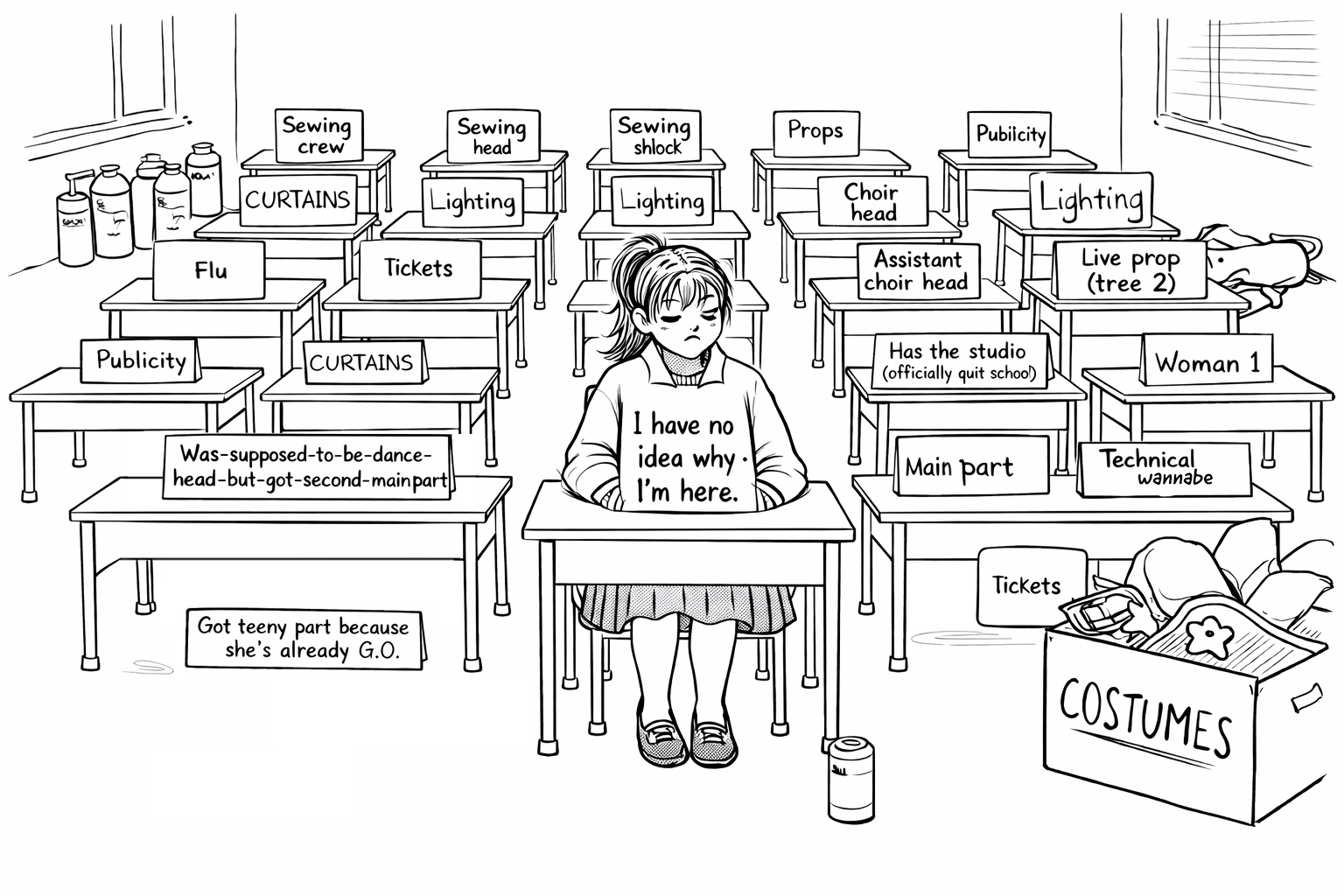
The majority of teachers shared roughly the same game plan: Don’t fight them – show genuine interest and share in their excitement. Hindy acknowledges that teaching during production season is definitely compromised teaching. “It’s not just the missed class time – it’s a serious lack of focus.” Still, she believes that these few weeks mean the world to so many students and create their fondest high school memories. “Make peace with the reality of play season and lean into it,” she advises. 

Liba says that when she gives her students time to talk about the play, they feel like she’s “in on it”. She finds that the more she connects with their performance, the better they snap back into real learning in her class post-play season. Of course, she tries to attend either the dress rehearsal or the play. “I find that I gain more than I lose when I show interest and devote time to their play, when I don’t make them feel that their year’s highlight is a nuisance to me.”


Set (very) Realistic Goals

Shifra, a veteran mechaneches who just recently returned to teaching after a ___ hiatus, has what to share from her years of experience. “Set a realistic learning goal to have reached by the end of play season. Be transparent with the girls about it. ‘Throughout play season, we are going to cover chapters/perakim _____. Even if you’ll be out of class, you are still responsible to make up the work.’ And incentivize! ‘If we meet our goal, and we still have time at the end, then we’ll learn something light/I’ll teach you some interesting voice techniques I learned when I headed choir in 11th grade.’”


Capitalize! 

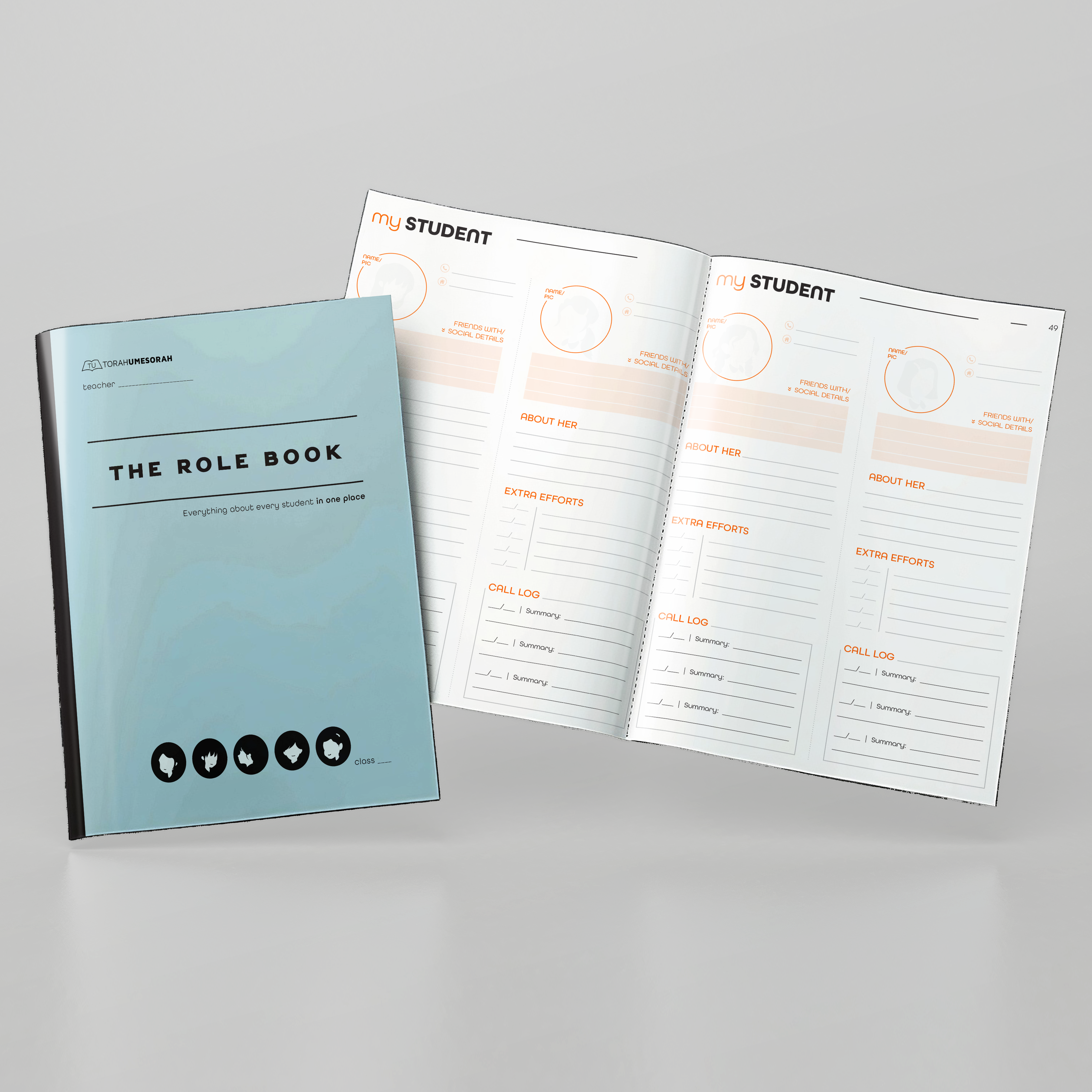
Mindy’s candid take: “As a high school teacher, teaching three, four, or five 45-minute periods a week, opportunities for connection need to be expertly spotted and grabbed.” She looks forward to play season as a highlight in this respect. “I get to show them that I’m interested, that I care, and that I relate to their experiences. I share memories of my own tryout traumas and compliment them on whatever practice and prep I get to see. I was given a period to supervise practice, anyway – why should I not use it to look out and find girls who I can literally light up with just a compliment?” 

Mimi says it does her good to sit through her students’ performance and be wowed to see girls shining onstage (or backstage) – especially those she never dreamed had such talent. She gets to see her students on an entirely new level. “That’s what play is all about. If we lose sight of that mission, then we have no need for a performance.” Mimi goes so far as to bring a little notepad along with her, jotting down a list of names and details to remember to compliment when she returns to class the next day.

Something as tiny as a safety pin in a sleeve that’s too long or a sentence as short as ‘Sury, you are a fantastic dancer!’ can be what sticks with them for the rest of the year – or even the rest of their lives.

Leave a Reply

Your email address will not be published. Required fields are marked *

MORE TO EXPLORE

Graduations

End-of-year celebrations in early childhood should feel joyful, simple, and meaningful—for both children and teachers. You don’t need anything overproduced to make it memorable; it’s the milestone itself that makes it special. Here are some ideas that strike that balance: “Little Steps, Big Growth” Ceremony Keep it short and sweet.Each child walks across a small “stage,” and you share one personal sentence about them—a strength, a moment of growth, or something that makes them unique. They receive a certificate, and a soft background song can add a special touch.   Themed Performance (Short + Sweet) Choose 2–3 songs with simple motions. Themes that work well: Keep it under 10 minutes—parents appreciate it, and children stay engaged.   Individual “Spotlight Moments” Instead of a full performance, give each child a moment to shine.Call them up and say something like:“This is ___, he loves building and is always ready to help his


Read More »

Week 1: Belief Breeds Success

Welcome to the first week of the K’mayim Sefira Challenge. We begin not with action in the classroom, but with something more foundational: how we see our students on the inside. Week 1:Belief Breeds Success: The Subconscious Connection   The Challenge: Write a positive affirmation for each of your K’mayim students. Not a general compliment, but a statement of belief in her potential. “I believe that Hashem has granted this student infinite potential, and she has it in her to become…” For example: Though she seems so strong and opinionated, I can see the softness beneath the surface, and I know that one day she will find the right balance. or Beneath the gashmiyus that defines her surface, I believe that there is a neshama that is thirsty and ready to grow. The focus is not who she is today, but who she can become. As you do this, hold

Read More »

The K’Mayim Challenge

The K’mayim Sefira Challenge is a 4-week journey designed for teachers across all grades. Each week, you’ll take on one focused, practical challenge—small, intentional shifts that reshape how you think about, relate to, and respond to your students. This is not about adding more to your workload. It’s about infusing what you’re already doing with deeper awareness and purpose. Are You Ready to Begin? Over the coming weeks, you’ll be guided step by step through this process. No complicated systems. Just internal work that leads to real results. Choose your students The Foundation What this looks like 1. Choose your Students Choose 2-4 students who you feel you did not connect with/get through to yet who will become YOUR Kmayim students, and watch the ripple effect take place.   Is it the quiet one who is never seen?  Do you really know her? Her likes, her challenges, her dreams she

Read More »

Repeating A Grade

Is Repeating a Grade the Right Choice?  A Thoughtful Look for Early Childhood Educators   By Mrs Becky Udman Early Childhood Consultant, Torah Umesorah   It’s one of the hardest questions we face as early childhood educators:Is this child ready to move on—or would they truly benefit from another year? Grade retention is never a simple decision. It’s layered with emotion, pressure, and a deep desire to do what’s best for the child sitting right in front of us. And in early childhood, where development can vary so widely, the answer is rarely black and white.   When an Extra Year Might Make Sense When a child “sticks” out amongst his peers in more then one area of development we want to consider what Dr Ross Green, a renowned clinical psychologist and author,  teaches, “Children are not lacking the will, they are lacking the skill.” When teaching young children our

Read More »

Send Us A Message

WE THINK YOU'LL LIKE THESE

Graduations

End-of-year celebrations in early childhood should feel joyful, simple, and meaningful—for both children and teachers. You don’t need anything overproduced to make it memorable; it’s

Read More »

The K’Mayim Challenge

The K’mayim Sefira Challenge is a 4-week journey designed for teachers across all grades. Each week, you’ll take on one focused, practical challenge—small, intentional shifts

Read More »

Repeating A Grade

Is Repeating a Grade the Right Choice?  A Thoughtful Look for Early Childhood Educators   By Mrs Becky Udman Early Childhood Consultant, Torah Umesorah  

Read More »

Join the Movement

Movement Builds Minds:  3 Ways to incorporate more kinesthetics in your learning   Have you ever noticed how children remember songs with motions better than

Read More »

General Studies

At this time we offer classroom setup materials only for General Studies. You can also browse themed bulletin boards by clicking General Studies in the menu.

Grade

1

Grade

2

Grade

3

Grade

4

Grade

5

Grade

6

Grade

7

Grade

8

Bring it up a level with ChinuchHub workshops:

torah (by Torah Umesorah Teacher Center)

Limudei Kodesh

calculator (by Torah Umesorah Teacher Center)

General Studies

toy blocks (by Torah Umesorah Teacher Center)

Early Childhood

by Torah Umesorah Teacher Center

Interactive Supplies

by Torah Umesorah Teacher Center

Browse By Grade

Best
Sellers