Is Repeating a Grade the Right Choice?
A Thoughtful Look for Early Childhood Educators
By Mrs Becky Udman
Early Childhood Consultant, Torah Umesorah
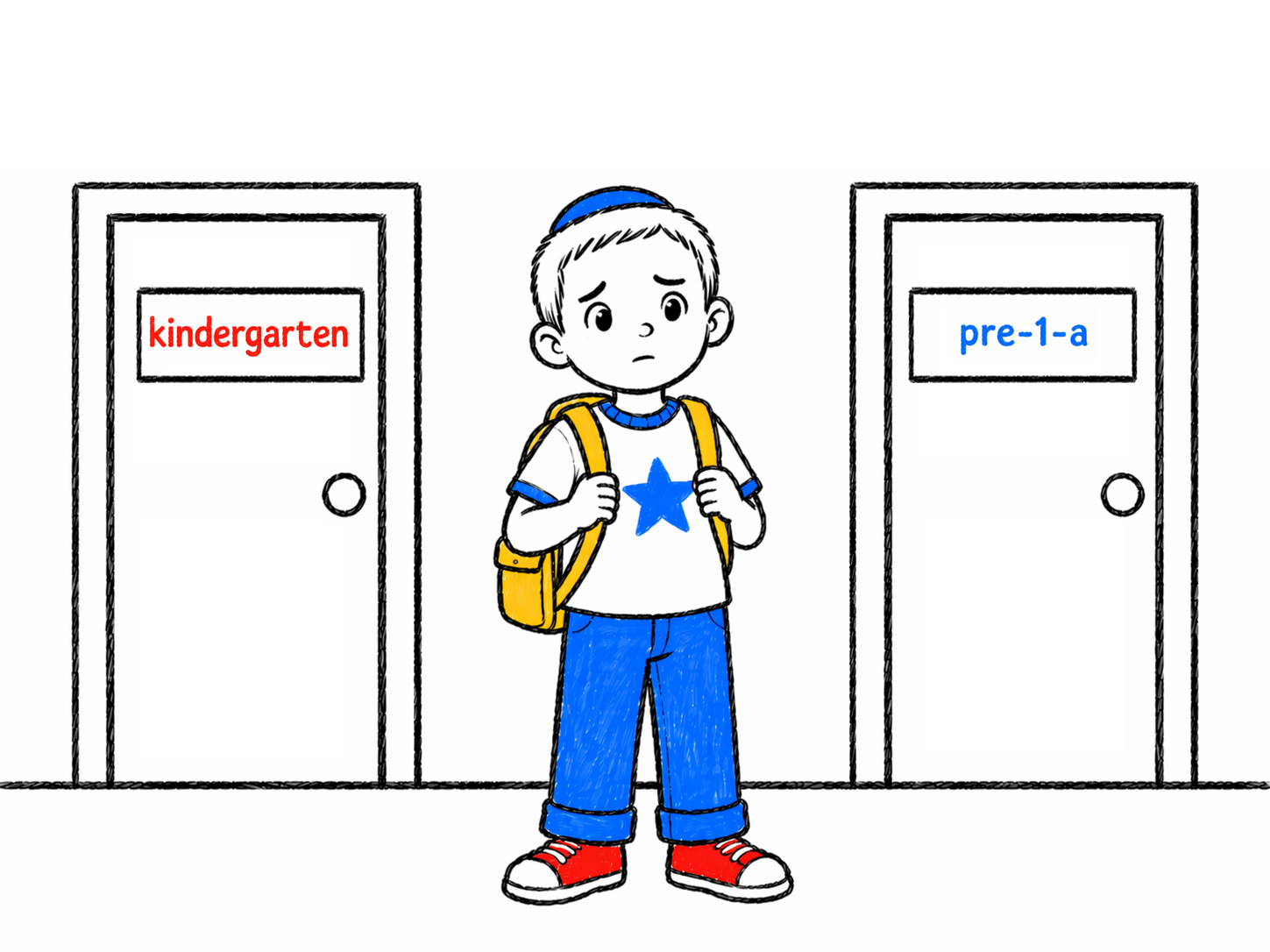
It’s one of the hardest questions we face as early childhood educators:
Is this child ready to move on—or would they truly benefit from another year?
Grade retention is never a simple decision. It’s layered with emotion, pressure, and a deep desire to do what’s best for the child sitting right in front of us. And in early childhood, where development can vary so widely, the answer is rarely black and white.
When an Extra Year Might Make Sense
When a child “sticks” out amongst his peers in more then one area of development we want to consider what Dr Ross Green, a renowned clinical psychologist and author, teaches, “Children are not lacking the will, they are lacking the skill.”
When teaching young children our main goal is to instill a love for learning and a love for Torah. If a child is often frustrated and constantly being redirected and corrected there is potential to Chas VShalom create a negative association with learning and Torah.
Although most children develop at a typical pace, some children need more time build their skill, it is very important to recognize the role that “more time” plays in their future connection to learning and Torah.
Significant developmental delays
If a child is struggling across multiple domains—language, motor skills, and social-emotional development—and is not functioning comfortably within the classroom environment, an extra year may provide the time they need to grow.
When Retention Is Not the Answer
If a child is making progress (even slowly), responding to support, or struggling in just one area, holding them back may not lead to better outcomes. Without changes in instruction or environment, the same challenges often repeat themselves.
Consider the Alternatives
Sometimes, the best solution isn’t repeating a grade—it’s rethinking the support.
- Increased access to support services (speech, OT, behavioral support)
- Adjustments within the classroom environment
- More intentional differentiation and scaffolding
A Guiding Question
When you’re weighing this decision, come back to this:
“Will an extra year—with the right supports—truly change this child’s trajectory?”
If the answer is yes, retention may be a meaningful opportunity.
If the answer is unclear, it may be a sign to keep exploring other supports.
Final Thoughts
As educators, we’re not just deciding where a child belongs next year—we’re shaping how they experience school, learning, and themselves as learners.
Whatever the decision, it should be rooted in care, collaboration, and a deep understanding of the child as a whole.
Because each child comes to us with a unique neshama, exactly as Hashem created them—full of potential and purpose.









































One Response
I’ll always be grateful to my son’s kindergarten Morah for encouraging us to have him repeat kindergarten. He was up to par cognitively, but lagging slightly in fine-motor skills. Giving him an extra year gave him the opportunity to excel, and BH, he is doing better socially as well!