


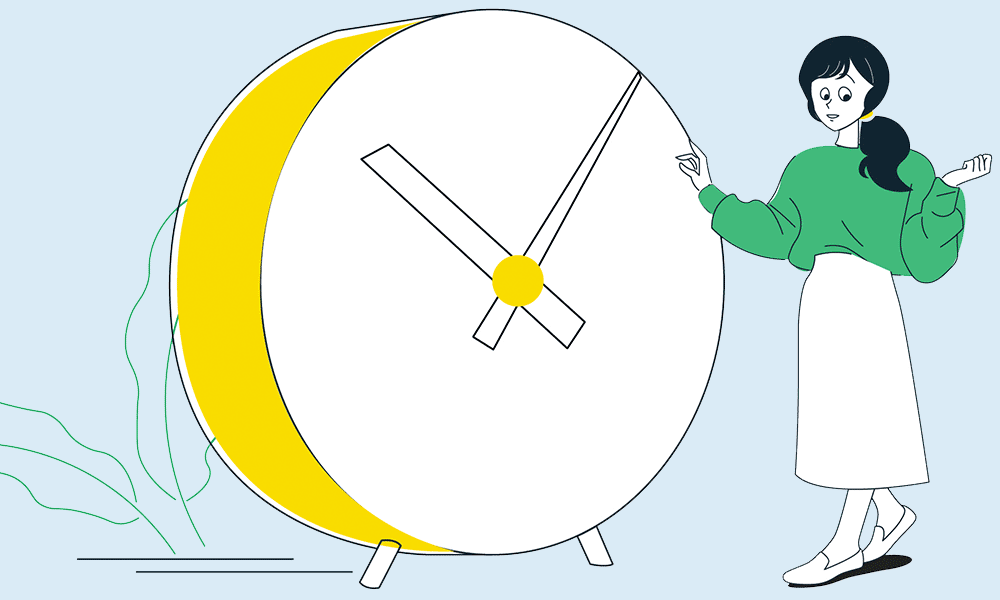
Too Much to Cover or Nothing to Teach?

The end-of-year curriculum crunch

It’s usually not more than eight weeks – ten, tops. 

For some, it feels more like five months. For others, three days. 

Approach any teacher during those air-conditioner-blasting, summer-fever-burning school days and tell her you need her class for an hour.

She’ll either bless you or plead the verge of tears, promising you anything at all, if you just let her continue teaching for that precious hour. 

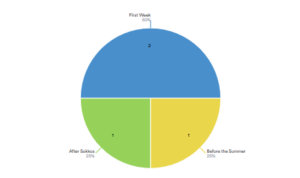
What’s your core challenge in those last weeks of school – too much to cover or nothing to teach? 

It’s all dependent on an endless list of factors, such as grade level, subject, class temperament or learning style, teacher personality, the interplay between Hebrew and secular calendar, and testing schedules.

Throw in a few unforeseen circumstances, performances, trips, state tests, reviews, finals, memory-making, etc.,  and the short few weeks are shortened by another one or two weeks, at least. 

A select (and much-envied!) few seem to have it down to a science, breezing right through May and June while others rush to cram it all in. 

No matter your style – we get you – and we’ve got you covered. 

Which one are you? 

So little time and still so much to cover!

1. Work backward and be realistic. 

Shevy sits down with a calendar and plans the next two months. She works backward from the last teaching day, factors in 2-3 days for review or school functions, plus a bit of wiggle room here and there. 

She sees exactly how much time she has left, and then plans which units to cover, writing down a realistic objective for each day. (Spoiler: It’s always less than she thought she would teach.)

Set goals that are truly possible, even if it means dropping some of your dreams. 

Try this! Once your curriculum has been pared down to a realistic size, you may even need some of our tips for teachers who are left with a few extra days.


2. Teach only what is absolutely necessary. 

That riveting mashal you love that takes up a fifteen-minute chunk of the lesson? It hurts, but it may have to go.


Change the way you teach.

  • Have students prepare and summarize perakim/chapters at home
  • Use more handouts, worksheets,and flashcards


So much time and not enough to teach!

You’ve decided on the last unit for this year, but you find yourself with a few extra days. While it’s not enough time to start an entirely new unit, there’s still ample opportunity to teach something meaningful. Here are some ideas to help you make the most of that time. 

Consider integrating these “extra” lessons throughout the last few weeks instead of saving them for the end, so you don’t give the impression that you’re merely trying to fill time.

Here are some ways how:

1. Connect!

There’s something special in the air those last few school days – students are craving last-minute moments of connection and engagement. You’ll be surprised how sweet and delightful this time of year can be – it might just become your favorite. 

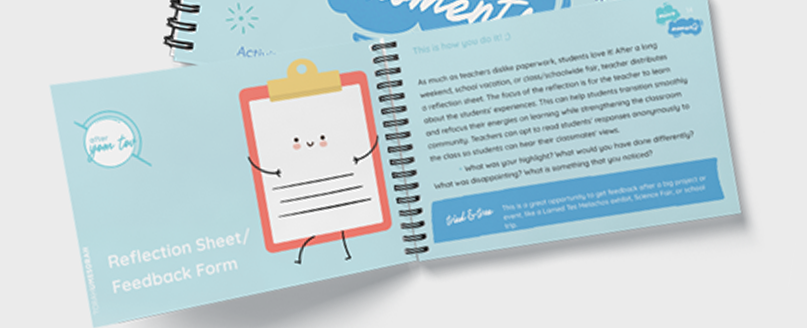
Check out Micro-Moments for some great ideas you can implement today.

2. Lessons for Life

Now’s the time to have discussions that your students will remember beyond the material they studied for the test. Pick topics you’re passionate about or messages you feel your students this year need to hear.

English teachers: This is for you, too! 

Explore niflaos haBorei, analyze thought-provoking quotes, poetry, or pieces of literature. Have students journal on topics of self-growth while incorporating elements of writing skills. 

This is also a great time to incorporate some history of Jewish communities during significant historical eras.

3. Points of Interest 

Wrap up the subjects you teach with an intriguing extra. 

  • Guest Speaker

Bring down an author to speak about the publishing process, an immigrant to speak about another country, or an eyewitness to an event or time period.

  • Field trip 

Organize a brief excursion to see science in action or arrange a day at a factory or museum.

  • Additional ideas: teach a song, show a video or slide presentation, or hand out worksheets with a twist.

    4. Student Teaching and Interactive Review

    Let your students take the lead! Assign them new material to present or to lead a review. Interactive teacher-led reviews can also be exciting, especially when you incorporate resources from Torah Umesorah’s “must-haves.”


    Don’t forget to try again next year!

    Learn from this experience – try to track where things glitched off-track and plan accordingly for the year to come, be”H. 

    When ‘just don’t finish’ is just not an option

    This is often the case with many high school teachers, especially when it comes to Regent/state test subjects, where students are counting on you to help them get the best grade possible. 

    Raizel, a 9th-grade biology teacher in Brooklyn (where students take NYS Regents), will offer to teach a double or extra period instead of a teacher who is out or who won’t mind taking the period off. She often needs to do this at the end of the year, but from time to time during quiet periods of the school year, she tries to be proactive and get in some valuable learning time to beat the frenzy later. 

    Mrs. W., a venerated and beloved mechaneches teaches biurei Tefillah in 12th grade. During some school years, she has not managed to cover all the Tefillos she typically teaches. After requests from her students, she held three optional classes over the phone during the summer. Students called in from their bungalow colonies, camps, and even tours overseas. 

    Leave a Reply

    Your email address will not be published. Required fields are marked *

    MORE TO EXPLORE

    Week 2: Daven for Her

    As we continue the K’mayim Sefira Challenge, we return to a place that quietly shapes everything—our פנימיות. Week 2:Daven for Her   The Challenge Choose one student to focus on this week. Learn her full name, and say an extra tefilla or a perek of Tehillim for her each day. It can be just a small moment, but one filled with awareness and care.   This week’s challenge is to take a moment each day to daven for each of your K’mayim students. It can be a quiet perek of Tehillim, a mention in Shemoneh Esrei, or a simple bakasha from the heart. This is something to do consistently throughout the week—no matter how many times you teach. As you do this, keep in mind: A student may feel like a challenge, or even just “average” in the classroom—but she is someone’s whole world. A child deeply loved, with a

    Read More »

    Graduations

    End-of-year celebrations in early childhood should feel joyful, simple, and meaningful—for both children and teachers. You don’t need anything overproduced to make it memorable; it’s the milestone itself that makes it special. Here are some ideas that strike that balance: “Little Steps, Big Growth” Ceremony Keep it short and sweet.Each child walks across a small “stage,” and you share one personal sentence about them—a strength, a moment of growth, or something that makes them unique. They receive a certificate, and a soft background song can add a special touch.   Themed Performance (Short + Sweet) Choose 2–3 songs with simple motions. Themes that work well: Keep it under 10 minutes—parents appreciate it, and children stay engaged.   Individual “Spotlight Moments” Instead of a full performance, give each child a moment to shine.Call them up and say something like:“This is ___, he loves building and is always ready to help his


    Read More »

    Week 1: Belief Breeds Success

    Welcome to the first week of the K’mayim Sefira Challenge. We begin not with action in the classroom, but with something more foundational: how we see our students on the inside. Week 1:Belief Breeds Success: The Subconscious Connection   The Challenge: Write a positive affirmation for each of your K’mayim students. Not a general compliment, but a statement of belief in her potential. “I believe that Hashem has granted this student infinite potential, and she has it in her to become…” For example: Though she seems so strong and opinionated, I can see the softness beneath the surface, and I know that one day she will find the right balance. or Beneath the gashmiyus that defines her surface, I believe that there is a neshama that is thirsty and ready to grow. The focus is not who she is today, but who she can become. As you do this, hold

    Read More »

    The K’Mayim Challenge

    The K’mayim Sefira Challenge is a 4-week journey designed for teachers across all grades. Each week, you’ll take on one focused, practical challenge—small, intentional shifts that reshape how you think about, relate to, and respond to your students. This is not about adding more to your workload. It’s about infusing what you’re already doing with deeper awareness and purpose. Are You Ready to Begin? Over the coming weeks, you’ll be guided step by step through this process. No complicated systems. Just internal work that leads to real results. Choose your students The Foundation What this looks like 1. Choose your Students Choose 2-4 students who you feel you did not connect with/get through to yet who will become YOUR Kmayim students, and watch the ripple effect take place.   Is it the quiet one who is never seen?  Do you really know her? Her likes, her challenges, her dreams she

    Read More »

    Send Us A Message

    WE THINK YOU'LL LIKE THESE

    Week 2: Daven for Her

    As we continue the K’mayim Sefira Challenge, we return to a place that quietly shapes everything—our פנימיות. Week 2:Daven for Her   The Challenge Choose

    Read More »

    Graduations

    End-of-year celebrations in early childhood should feel joyful, simple, and meaningful—for both children and teachers. You don’t need anything overproduced to make it memorable; it’s

    Read More »

    The K’Mayim Challenge

    The K’mayim Sefira Challenge is a 4-week journey designed for teachers across all grades. Each week, you’ll take on one focused, practical challenge—small, intentional shifts

    Read More »

    Repeating A Grade

    Is Repeating a Grade the Right Choice?  A Thoughtful Look for Early Childhood Educators   By Mrs Becky Udman Early Childhood Consultant, Torah Umesorah  

    Read More »

    Join the Movement

    Movement Builds Minds:  3 Ways to incorporate more kinesthetics in your learning   Have you ever noticed how children remember songs with motions better than

    Read More »

    General Studies

    At this time we offer classroom setup materials only for General Studies. You can also browse themed bulletin boards by clicking General Studies in the menu.

    Grade

    1

    Grade

    2

    Grade

    3

    Grade

    4

    Grade

    5

    Grade

    6

    Grade

    7

    Grade

    8

    Bring it up a level with ChinuchHub workshops:

    torah (by Torah Umesorah Teacher Center)

    Limudei Kodesh

    calculator (by Torah Umesorah Teacher Center)

    General Studies

    toy blocks (by Torah Umesorah Teacher Center)

    Early Childhood

    by Torah Umesorah Teacher Center

    Interactive Supplies

    by Torah Umesorah Teacher Center

    Browse By Grade

    Best
    Sellers