The elementary school teacher’s guide to putting on a class performance
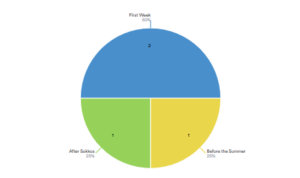
Siddur play, Chumash play, Purim play, Tehillim play, Birchas Yaakov performance, Rosh Chodesh assembly, seventh-and-eighth grade performance… Most elementary school teachers have one of the above written into their contracts. Opinions and feelings, when we took a poll, were mixed. Excellent advice was a’plenty.
Read, enjoy and get equipped!
The Upsides
Nechama is a sixth grade teacher who’s been running her annual class play for many years. She sees firsthand the positive outcomes of the efforts she invests to make a beautiful performance where every student can truly shine. “A lot of girls really have hidden talents. Giving a girl the responsibility to take charge can show you a side of her you never knew existed. Pushing a shy student to take a role you know she is really capable of can open her up, turning her into her true self and boosting her social standing.”
For the students, it’s a change of pace that adds color to an otherwise predictable year, and for many, it’s what they will most remember.
“A play is not a waste of time. They might learn more from play than from class. They are getting vital skills – organization, team playing, time management, and more than anything: CONFIDENCE!” Says the principal of a large school.
The Downsides
A class performance is usually something you do on your own – it’s generally not a school or grade project. You have to be organized to have everything ready in time. Not every teacher has every talent, but this is a responsibility that most teachers just have to manage regardless of capability – and though it’s fun for the students, it’s a lot of hard work for the teacher.
Chanie points out that as excited as students may be at the outset, they may eventually become bored and drained from constant, long-winded practice. They may grow antsy and impatient, which is discouraging for the teacher working to make the performance enjoyable for them.
In Practice
Compliments!
Constant recognition at every step will make students feel good and give them the push to keep at it.
Plan, preempt, prevent
Have an incentive/motivation plan for both practice and learning time.
Distributing Parts
Be sure to balance your choices between students who need the boost and students who have the skill.
A great idea for avoiding disappointment is to assign all parts before distributing the full script. This way, students don’t set their hearts on a particular part.
Some teachers will find out who the previous year’s star was so that they don’t use the same girl.
Practice
Run through the entire script and have all students highlight their lines, including what they say as a group. Explain that they own the lines they say as a group just as much as the lines they say individually.
Encourage students to practice lines, songs, motions, etc. at home. Getting stuck on the surprise element cuts out valuable practice time at home.
Conduct shorter practices more frequently instead of drawn out practice sessions.
Costumes
Costume distribution can bring seemingly unreasonable outbursts from students about their costumes being ‘nerdy’, ‘weird’, or ill-fitting. Be understanding that they are at a very self-conscious stage and help them get over their insecurities.
Chanie shares that her students are extra self-conscious about wearing old-fashioned style costumes. She tells them that the ‘funnier’ they look, the better and more authentic it means the costume is!
Additional Ideas
Remember: It’s not about YOU or your image, it’s about THE students and how they will feel after performing.
For a girl who can’t sing/dance/act, or has a disability that prevents her from performing, insert something special to make her shine – have her hold a big sign, etc.
Mrs. M.’s true story:
*Mrs. M. had a special student, Malky*, who joined her class from Eretz Yisrael mid-year – she was not well and came to the U.S. for treatments. The girl was exceptional in her desire to be like the rest of the class, in her intelligence and depth… But what was truly exceptional was what Mrs. M. did to make Malky’s dream of taking part in the performance come true. Malky was in and out of the hospital until about three days before the play, but when she found out about it, she insisted on taking part. Mrs. M. took action. She pushed the performance off by a day. She took a video of the class practicing and sent it home with Malky to use for practicing her part. She designed a special part for Malky, which basically gave her the lead role – without too many lines and a major, exciting costume. Malky, ever-determined, locked herself into her bedroom for hours on end and practiced until she knew every song and motion.
Malky came onstage at the performance and shone. Her mother shone. Malky ע”ה is no longer with us, but everyone who knew her still speaks about how Mrs. M. lit up her little world at that performance.
Always be fully ready a week before. You never know what can come up!
Less is more – make it a shorter play. Everyone only stands to gain.
Explain the storyline to the students and make sure they can follow! (Especially if it’s not in their first language.)
If you’ve been running the same performance for many years, change something up a little bit. Make it fresh for yourself and for mothers of a line of daughters.
Play Day!
The play should start ON TIME. Be clear about it, and everyone will hopefully conform.
Discourage mothers and grandmothers from bringing gifts to the performance. They can give the girls gifts at home.
After: Do something special in the classroom with students to celebrate their success. It makes them feel that their teacher is proud of them and helps transition back to regular learning.
But I’m Just Not a Play Person!
Not every teacher is a natural director, singer, or choreographer – and that is perfectly fine. In fact, some of the most meaningful lower-elementary performances are led by teachers who focus on clarity, structure, and learning, rather than theatrics. With the right framing and planning, a class performance can feel manageable and even rewarding.
Frame It Correctly for Yourself
The most important step: Adjust your mindset.
You are not directing a show.
You are presenting students demonstrating their learning or new and beautiful concepts.
This removes a tremendous amount of pressure. When you view the performance as an extension of the classroom – rather than a major production – your role becomes much clearer and far less intimidating.
Build the Performance Around Content, Not Shtick
Strong content can carry a performance even when delivery is simple. Parents respond very positively to clarity and substance, especially with a Limudei Kodesh play, and do not expect flair or spectacle. When students speak clearly, know where to stand, and demonstrate what they have learned, the goal has been met. Calm, orderly, and content-rich presentations are often the most meaningful – especially when children are truly shining onstage.
Keep Movement Simple and Predictable
Movement should support organization – not creativity. Simple, repeated actions help children feel secure, help you maintain decorum and allow students to focus on their words and message rather than what their bodies should be doing.
Helpful examples include:
Standing up and sitting down on cue
Stepping forward when it is your group’s turn
Holding up a picture or word card
Turning to face the audience together