


The last day before Purim doesn’t have to dissolve into chaos. With a little planning, it can be both fun and meaningful for students.
The Clown Hat Reflection
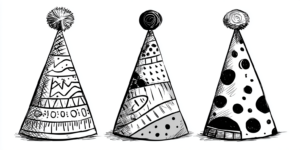
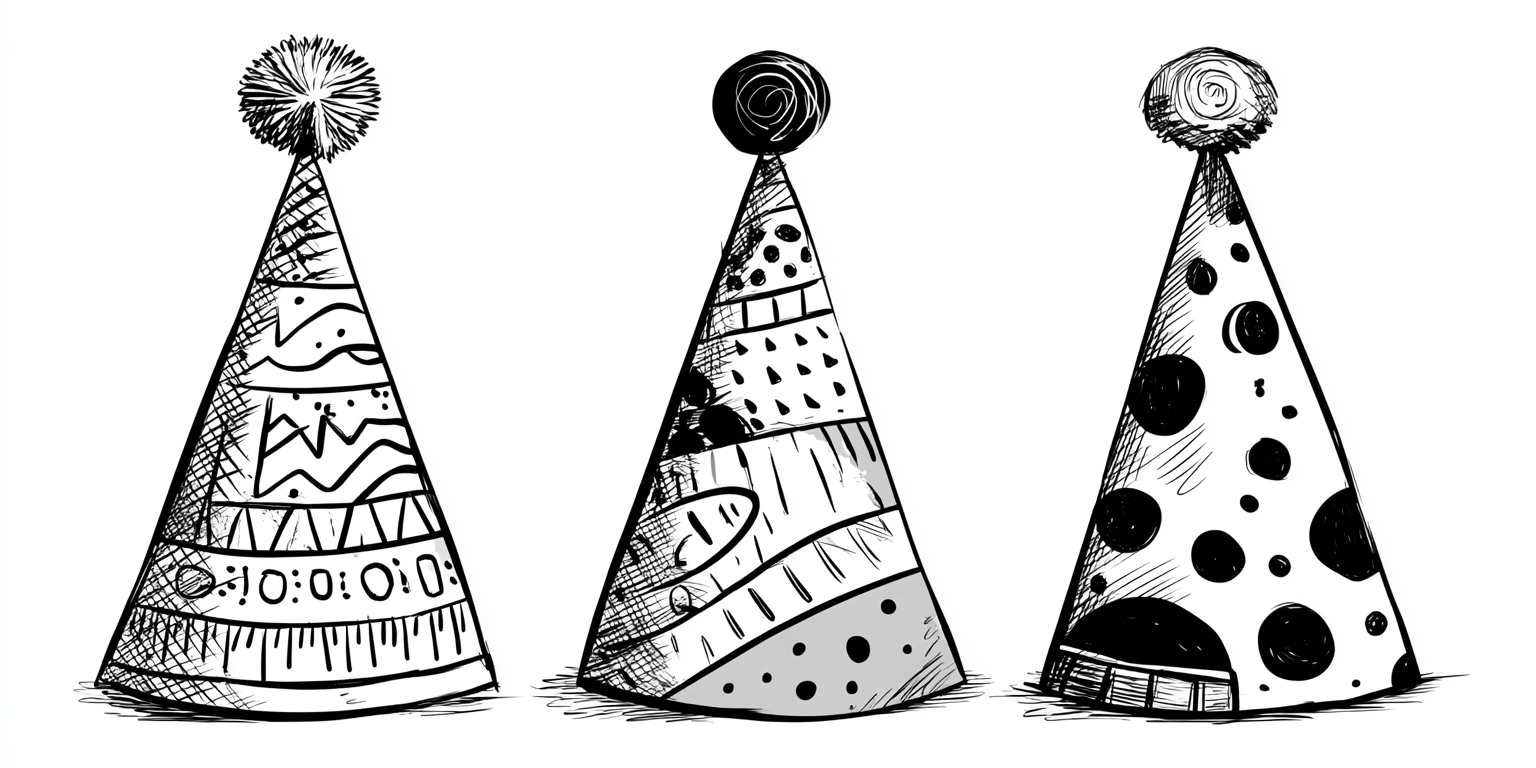
Each student decorates a paper clown hat — completely freestyle. When finished, the hats are displayed on the teacher’s desk.
One by one, a student selects a hat (not her own) and describes both the design and the personality of the girl who created it. The only rule: every comment must be positive and anchored in the visible features of the hat.
A symmetrical layout reflects careful thinking.
Neat spacing signals organization.
Vibrant colors suggest confidence.
Detailed embellishments show depth and creativity.
Materials Needed:
-
- White paper clown hats (one per student)
-
- Markers, Colored pencils, crayons, scissors, tape, glue, stapler
-
- Optional: glitter glue, stickers, patterned paper scraps
- List of attributes for students to work with
The Costume Hat Circle
For this activity, each girl brings a costume hat from home and places it in a box. Students sit in a circle with the box in the center. One at a time, a student draws a hat and “assigns” it to someone in the class — explaining why, in a positive way.
A police officer hat goes to the student who consistently follows directions.
A chef’s hat matches the girl who “mixes” everyone together at recess.
A crown belongs to someone who has a “shem tov.”
A construction helmet fits the student who builds others up.
This exercise trains students to articulate strengths in their peers.
Materials Needed:
-
- One costume hat per student (brought from home; teacher should bring several just in case)
-
- A large box or bin for the center of the circle
-
- List of positive traits (in case students need help articulating )
- Music
“Ad D’lo Yada” — Get to Know Your Classmates
Purim is about what’s hidden. This game reveals what we don’t yet know about one another.
The teacher prepares six light, preference-based questions in advance (favorites, interests, simple choices — nothing private).
Each student decorates a sheet of adhesive labels with her initials and small designs. While music plays, students stand in two concentric circles. The outer circle rotates to the right. When the music stops, the teacher announces a question.
The girls in the inner circle have three seconds to answer. If they respond in time, they receive a label from their partner and stick it onto their face. After several rounds, the circles switch roles.
The student with the most labels wins — but the real outcome is broader familiarity and connection across the class.
Materials Needed:
-
- Sheet of adhesive labels, one per student
-
- Markers or gel pens for decorating labels
-
- List of 6 pre-prepared questions (teacher copy)
-
- Music source
-
- Timer (for 3-second limit)
-
- Open space for two concentric circles
Optional Enhancements:
-
- Whistle or bell for the 3-second limit
-
- Small prize for student with most labels